

A new year's resolution generator is a tool that picks one goal at random from a list you write yourself. You paste in your ideas, press the pick button, and get a single result to test against your real week. It will not invent goals or judge which ones are wise. For many people the hard part is starting, not choosing, and a fair draw can end a long debate in seconds. Below you will find how the method works, where it helps, and where it falls short for 2027.
Consider a bakery owner who swears every December to log sales, supplier invoices and wasted batches. By mid January the notebook is still blank. Or take a secondary school teacher who wants more reading in the evenings and keeps losing that hour to her phone. Both goals make sense. The stall happens earlier, when so much time goes into deciding what to aim for that the energy runs out before step one.
Now imagine the picker lands on learning basic video editing, and you feel a flat groan. That reaction is useful. You have just learned what you would not enjoy chasing, which narrows the field faster than another hour of deliberation. Nothing about the draw has to be binding. It is honest feedback, and you decide what to do with it.
Groups hit the same wall on a bigger scale. Picture four friends around a dinner table, each with three half-formed ideas for the year. Without some structure the talk can circle for an hour. One shared list and one draw can close the loop in minutes, and nobody has to win the argument because the choice came from outside the group.
Jump to a section:
- How the generator works
- Randomness without the jargon
- A comparison of resolution categories
- Ideas you can copy for 2027
- Step by step instructions
- What to check before you commit
- Common mistakes and how to dodge them
- Final Thoughts
How a New Year's Resolution Generator Works
Under the hood, the process has three steps. The tool accepts the list you supply, selects one entry, and shows that entry on screen. Most versions add a button to draw again. The output can only come from what you typed, so the quality of the input shapes the result. Vague wording, copied duplicates and wishes you do not really hold all show up in what comes back.
Some details depend on the specific page, so test them rather than assume. Paste a list that includes one blank line and one line with extra spaces, then draw a few times. If the blank line never appears, the tool skips empty entries. If a repeated idea shows up more often than the others, the tool treats each line as its own slot. Either way you learn how the page behaves before the list matters.
Repeats deserve a closer look. If the picker chooses uniformly from the lines you paste, a line that appears twice has two slots to land on, so it wins more often by design. That can suit a clear favourite, but most people want every option to have an equal chance. Remove duplicates before the draw unless you deliberately want that weighting.
Randomness Without the Jargon
Browser pickers usually lean on JavaScript's Math.random function. MDN's reference for Math.random states that it does not provide cryptographically secure random numbers, as of November 2026. That is fine for choosing a reading goal or a walking route, where nobody gains by predicting the result. Security matters when a prediction would be worth something, such as passwords or prize draws with money involved.
The Web Crypto API takes a different route. Its getRandomValues method on MDN is the standard browser option for cryptographically strong values, as of November 2026. This article does not claim that any RandomCount tool uses it. For a yearly goal the difference rarely changes anything you would notice, so the sensible question is whether the result is one you can live with.
Fairness, in this context, means the draw has no hidden preference for one line over another, and you agreed to accept the outcome before pressing the button. That second part is the one people skip. A draw cannot settle a debate if everyone keeps the right to ignore it.
Resolution Categories Compared
Most resolutions fall into a handful of groups. The table below turns a vague wish in each group into a version you could check on a given day. Sort your own ideas this way before you paste anything into a picker, so every line describes something you could start this week.
| Category | Vague version | Checkable version | Why it helps |
|---|---|---|---|
| Health | Get fitter | Walk for 15 minutes after dinner | You can see whether it happened today |
| Money | Save more | Move a fixed amount to savings each payday | Amount and timing are both clear |
| Learning | Learn something new | Finish one beginner lesson each week | Progress shows up in a calendar |
| Home | Be tidier | Clear the kitchen counter before bed | One area, one habit, one check |
| Social | See friends more | Message one friend every Sunday | Repeats weekly and takes two minutes |
Checkable versions share three features: one action, a fixed moment in the day or week, and an easy way to see whether it happened. Vague versions skip all three, which is why they feel fine in January and impossible to judge by February.
Health and money examples are personal preferences, not medical or financial advice. If a goal touches a medical condition, medication, debt or a large purchase, speak with a qualified doctor or financial adviser before acting. A draw can suggest an idea, but it should never stand in for that conversation.
Ideas Worth Copying for 2027
If you are starting from nothing, these ideas can go straight into a list. Pick the ones that feel a little uncomfortable but still doable. Those tend to last longer than goals that sound like homework you already failed.
Personal goals
- Cook one new dinner each week and jot down what worked.
- Take a five minute screen break before lunch.
- Read one chapter of a non-fiction book before bed.
- Check bank spending once a month, on the same day each time.
- Learn the names of ten plants or birds near your home.
Choosing between two ideas? Write both on separate lines, plus a third that is a deliberate stretch. Draw once. If the stretch wins, you have a clear reason to try it. If a safe option wins, you have permission to keep the year modest.
Group goals for friends and family
Group resolutions work best when everyone sees the same list. A weekly walk, a shared book club or a household rule that phones rest in a basket at dinner are easy places to begin. If the group wants a visual result, the wheel page lets everyone watch the pointer settle. When a shared challenge needs smaller teams first, the team split page can form pairs or squads before the goal is picked.
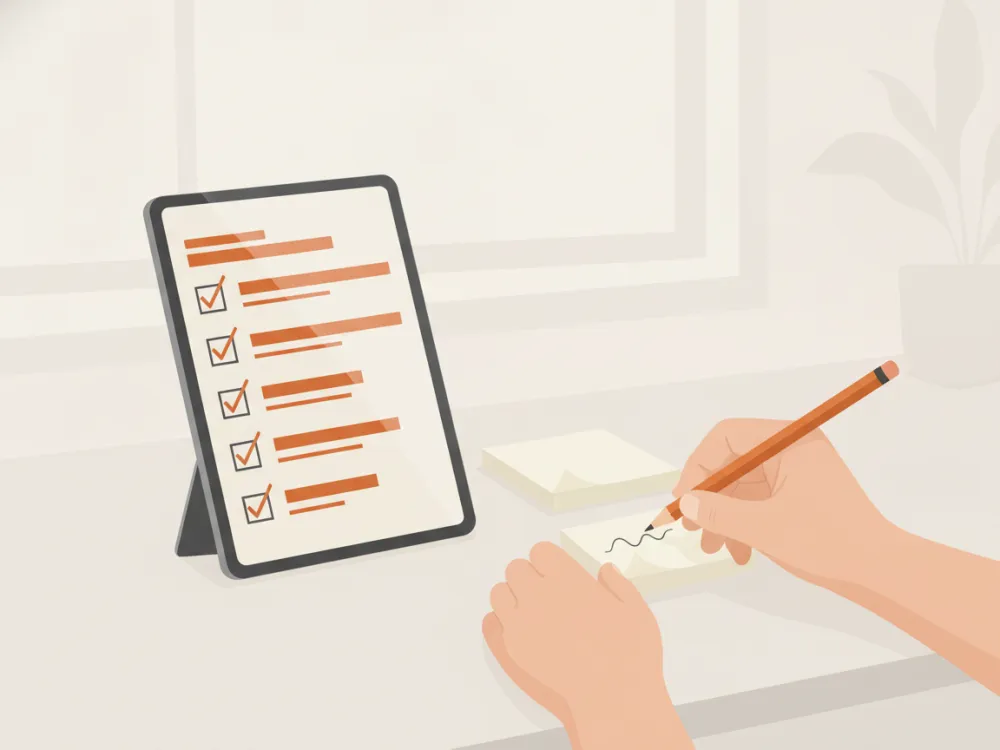
Step by Step: Building Your 2027 Shortlist
Work through these steps in order. Set aside a quiet stretch of time, and allow longer if several people are involved. Rushing the early steps usually means drawing from a weak list, which wastes the draw.
- Write each idea on its own line. Keep it short and specific, and aim for a list long enough to offer real choice.
- Open the list picker page and paste your lines into the input box.
- Scan for duplicates and near-duplicates. Keep one copy of each idea unless you want that idea weighted.
- Press the pick button and read the result aloud. Notice whether you feel relief, doubt or irritation.
- If the result cannot work in your life, delete that line and draw once more. Write down why it failed.
- Turn the accepted goal into one action with a day and a time attached.
- Add that action to your calendar, with a review date in late January.
The fifth step is where people often bend the rules without noticing. Removing a line after a poor fit is reasonable. Redrawing until the answer feels nice is not. The list is where your judgment belongs, so shape it carefully before the draw rather than after.
What to Check Before You Commit
Before a goal goes on your wall, try a few quick checks. None need technical skill. They show whether the draw behaves as you expect and whether the goal is one you can really begin.
Run the same list through the picker five or six times and note what comes back. Different entries should appear over several draws, though the same line can repeat back to back. If one line never appears, look for stray spaces, invisible characters or a missing line break that merged two ideas.
Next, copy the list somewhere safe and add one idea a second time. Draw ten times and count how often the doubled line appears compared with the rest. Ten draws is a small sample, so do not read too much into it. The exercise simply shows why duplicates deserve a look before a serious draw.
Here is a worked example with a made-up list of three lines: Read more, Walk after dinner, Learn Spanish. Suppose the draw returns Read more. That is still vague, so you turn it into reading ten pages before bed on weekdays. Now the goal passes the test in the next paragraph.
Then read each candidate and ask whether you could complete the first step this week. If not, shrink the goal until the answer is yes. Last, ask whether you would still want it if nobody else ever knew. A resolution that only looks good when shared often struggles in the quiet weeks of February.
Common Mistakes and How to Dodge Them
Simple tools invite careless use. These five habits come up often, and each one has a quick fix.
- Vague options. A line like be happier cannot be checked on a Tuesday. Turn it into an action before you draw.
- Too many winners. Choosing five goals at once spreads attention thin. Pick one main goal and perhaps one small habit.
- Endless redraws. One redraw after a truly unworkable result is reasonable. Redrawing until you like the answer defeats the purpose.
- No review date. Goals fade without a checkpoint. Add one to the calendar before you close the tab.
- Serious decisions by draw. A picker suits low-stakes choices. Health, legal and money decisions need qualified advice, not a random result.
If you want to see the same logic applied to quick group calls, the guide Yes or No Wheel for Group Decisions: A Simple Guide walks through everyday examples.

Frequently Asked Questions
What does a new year's resolution generator actually return?
It returns one entry copied exactly from the list you supplied. It does not rank goals, judge whether they are wise, or invent options of its own. Think of it as a neutral coin with more faces, not as an advisor. Read the result as a suggestion, then decide what to do with it.
How long should my list be before I draw?
There is no magic count. Include enough lines that the result feels like a real choice, but few enough that you still remember what each one meant. Anything you cannot explain to a friend in one sentence is a candidate for trimming. A dozen clear lines usually serve you better than forty vague ones.
Can a random draw ever feel unfair?
Yes. A favourite option can miss several draws in a row, and streaks look bigger on short lists, so the tool often gets blamed. Agree on a tie-break rule before you start, such as taking the idea written down first. That turns a frustrating moment into a rule you already accepted.
Can a new year's resolution generator work for a family or small team?
Yes. Collect everyone's ideas into one shared document, merge duplicates, and agree in advance that the result stands. A useful rule lets each person remove one line before the draw, never after. Groups that want a visual moment can use a wheel, while a household can simply read the result aloud over dinner.
What if my chosen goal stops feeling right by March?
That is information, not failure. Check whether the action is too large, too vague or simply no longer wanted. Too large means shrinking it to a daily step you can finish in ten minutes. No longer wanted means dropping it, drawing from the remaining lines, and noting why, so your next list improves.
Are money or health goals safe to choose by random draw?
Use a draw for low-stakes choices you control, like a daily walk or a reading habit. For money or health goals, a draw can only suggest a starting idea. Bring the shortlist to a professional who knows your situation, and mention any details you are unsure about, since that conversation is where the real decision belongs.
Final Thoughts
Whatever a new year's resolution generator hands you, the next move is yours. Paste a clean list, draw once or twice, and write the winner on a card with a review date in late January. If the goal still fits when that date arrives, keep it. If it does not, shrink it or swap it, and you will know more than you did in December. Ready for 2027? Open the list picker and see what comes up first.