
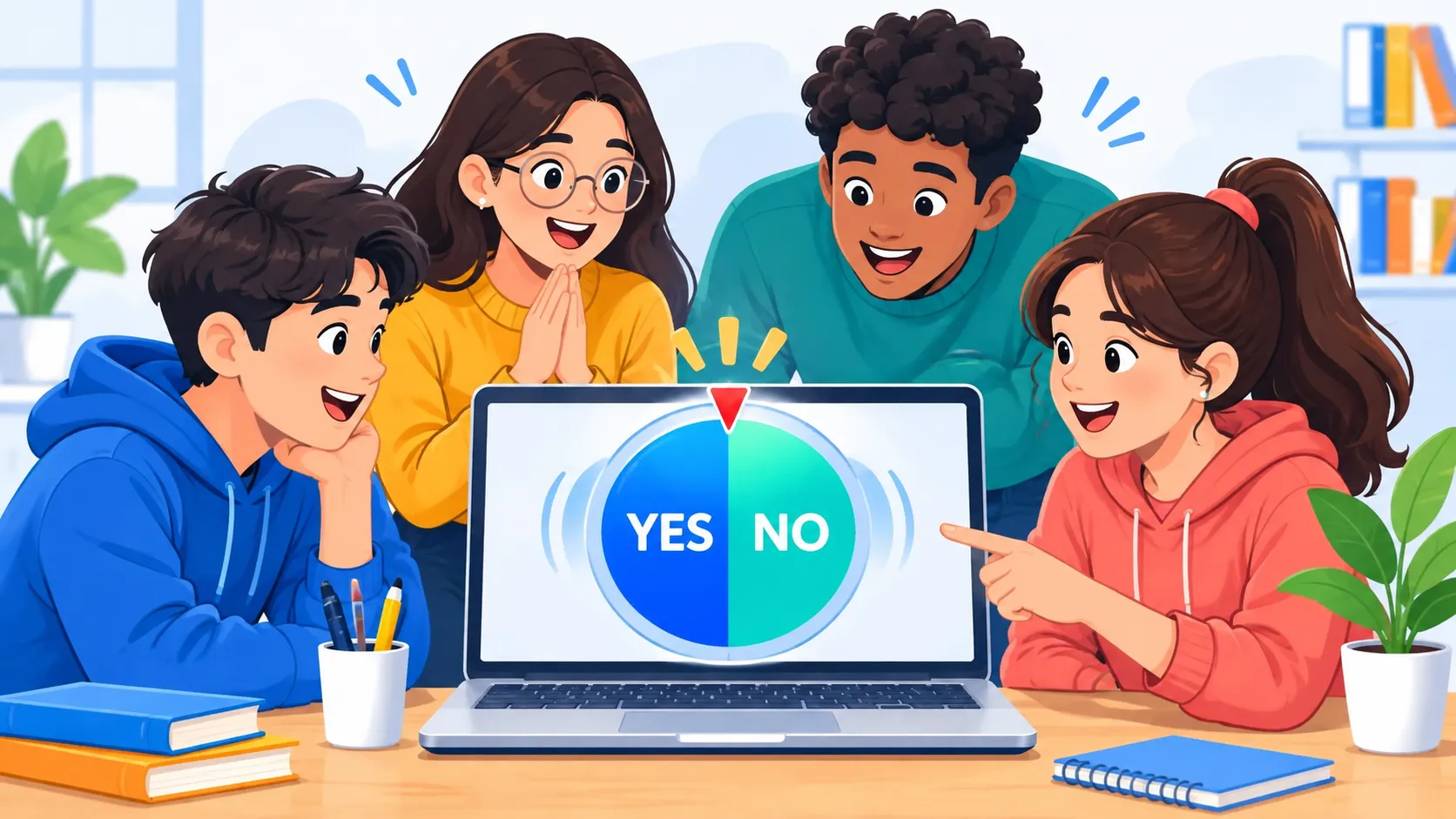
Have you ever spent more time deciding what to do than actually doing it? It happens when friends plan an outing, students choose a classroom activity, or family members try to agree on weekend plans. Everyone has an opinion, but nobody wants to make the final call.
A yes or no wheel gives people a quick way to choose between two clearly defined options when both outcomes are acceptable. Instead of spending several minutes debating a small decision, a group can agree on what YES and NO represent, spin the wheel and use the result to move forward. The simple spinning experience also makes an ordinary choice more interactive, especially when friends, classmates or family members participate together.
A yes or no wheel is most useful when a group has already narrowed a decision down to two acceptable choices. From choosing a game to planning a casual activity, it can make the selection process quicker and give everyone a chance to participate.
What Is a Yes or No Wheel?
A yes or no wheel is an online decision-making tool that randomly selects between two possible answers: YES and NO.
Before using the wheel, users should understand what each answer represents. For example, if the question is whether to organize a picnic, YES could mean going ahead with the plan, while NO could mean choosing another activity. Defining the outcomes first makes the result easier for everyone to understand.
Unlike a simple text-based answer generator, a spinning wheel presents the selection visually. A user starts the spin, watches the wheel move and sees whether YES or NO is selected. The exact setup depends on the tool, but the purpose remains the same: choosing between two predefined answers.
For example, if two friends cannot decide whether to order food or cook at home, they can assign one option to YES and the other to NO before spinning. The wheel then provides a random selection rather than allowing the same discussion to continue. Both participants should agree on the choices before using the result.
How to Use a Yes or No Wheel for Group Decisions
Using a random yes or no generator is straightforward. However, setting up the activity properly makes the experience more enjoyable.
Follow these simple steps:
-
Choose a clear question: Decide exactly what your group needs to answer. For example, "Should we play a quiz game today?"
-
Make sure everyone understands: Explain the question before spinning so nobody is confused about the result.
-
Open an online spinner: Visit the RandomCount Spin Wheel and prepare your YES and NO options.
-
Take turns: Allow different participants to start the spin. This makes the activity more interactive.
-
Accept the result: Once the wheel stops, use the selected answer to guide your next step.
Try our online spin wheel to make group decisions, choose activities, and enjoy random selections with friends.
Before spinning, make sure everyone agrees on what each answer means. For example, if your group is deciding between watching a movie and playing a board game, YES can represent the movie and NO can represent the board game. Once the options are agreed upon, keep them unchanged throughout that round. If someone suggests a different activity, discuss it first and begin a new spin with the updated choices.
For example, suppose your group is choosing between ordering pizza and cooking at home. Agree that YES means ordering pizza and NO means cooking at home before starting the spin. Once the wheel displays its result, follow the agreed choice if everyone is comfortable with it. If someone wants to suggest a different option, discuss it before starting a new round.
Why Groups Enjoy Random Yes or No Decisions
One person making every decision can sometimes leave others feeling ignored. A random decision wheel offers another approach for situations where both answers are acceptable.
Here are some practical benefits.
1. Everyone Gets Involved
Instead of allowing the loudest person to control the discussion, you can invite everyone to suggest questions and take turns spinning. This creates a shared activity rather than a one-person decision.
2. Less Time Spent Debating
Small choices don't always deserve a long discussion. Whether you're selecting a game or deciding what to do during a break, a random answer can help your group move forward.
3. A More Enjoyable Experience
Watching the wheel spin creates anticipation. Even a simple YES or NO answer can become a fun moment when friends or classmates are involved.
4. Useful for Quick Icebreakers
If a group is meeting for the first time, funny yes or no questions can help people start conversations. The spinner provides an easy starting point without putting too much pressure on anyone.
Fun Ways to Use a Yes or No Wheel
A yes or no wheel can make everyday activities more interactive when people need to choose between two simple options. The questions can be different depending on the setting, from picking a game with friends to introducing a quick classroom challenge or choosing a family activity.
With Friends
Planning a movie night? Ask questions such as:
-
Should we watch a comedy tonight?
-
Should we try a new restaurant?
-
Should we organize a weekend trip?
-
Should we play a guessing game?
-
Should we take a group photo?
To keep the activity fair and enjoyable, let each participant suggest a question and explain what YES and NO represent before the spin. For example, YES could mean trying a new game, while NO could mean allowing another friend to choose the next activity. Everyone should understand the options and agree that either result is acceptable. This simple rule keeps the game organized and gives each person a chance to participate.
If a classroom activity involves choosing a student, team or task from several options, teachers can also try an online random list picker. It offers another simple way to make selections when more than two choices are available.
In the Classroom
Teachers can use a yes or no spinner to introduce interactive classroom activities. For example, students can suggest questions related to a lesson, participate in quick revision games or decide whether to attempt an optional challenge.
A teacher can also use a separate random picker for assigning student turns. The University of Waterloo's classroom group-work guidance offers useful ideas for encouraging participation.
During Family Activities
Families often have different preferences. A spinner can help with simple questions such as choosing a board game, planning a themed dinner or deciding whether to have a movie night.
Make sure the choices are comfortable for everyone before spinning.
At Work or in Team Meetings
For informal team activities, an online decision wheel can help select a warm-up game, choose a short break activity or introduce a fun challenge.
It works best when the decision is low-risk and everyone understands the available choices.
For example, a team can use the wheel to decide whether to start a meeting with a short quiz or a quick discussion activity. The team should agree on both options before spinning and make sure the activity does not interfere with important meeting tasks. For formal decisions about deadlines, budgets or work responsibilities, discussion and relevant information should take priority over a random result.
How Does a Random Yes or No Generator Work?
A random yes or no generator selects one of the available answers using the selection method built into the tool. In a digital spinner, the software determines the selected option, while the spinning animation visually presents the result. The animation itself does not explain how the selection is made.
When YES and NO have equal selection weights, the generator is configured to give both options equal chances of selection. However, the result also depends on the software's random selection method and implementation. Two equal-looking sections on a visual wheel do not automatically prove that the underlying selection process is statistically unbiased. For users who want a balanced choice, checking the option weights and the tool's selection settings is a sensible first step.
For a useful introduction to random selection, you can read the NIST random number glossary and RANDOM.ORG's explanation of randomness.
Before relying on a digital spinner, check whether the tool gives both answers equal selection weights. Some tools allow users to adjust the size or probability of individual options, which can affect the result. If you want a balanced YES or NO selection, both options should have equal weights. Also, remember that a short sequence of identical results does not by itself prove that a generator is unfair.
If you want to understand different approaches to making group choices, the University of Minnesota's decision-making guide is another helpful resource.
Yes or No Wheel vs Coin Flip: Which Should You Choose?
Both tools can help with simple decisions, but they offer slightly different experiences.
A coin flip is familiar and quick. You toss a coin and receive heads or tails. A yes or no wheel provides a visual spinning experience that can be more engaging when several people are watching.
Choose a coin flip when speed matters most. Choose a wheel when you want to involve friends, students or teammates in the activity.
If you prefer a traditional heads-or-tails method, try the RandomCount online coin flip tool. It offers a quick alternative for casual decisions when you do not need a visual spinning wheel.
Expert Tips for Getting Better Results
A little preparation can make your spinner activity more useful.
-
Keep questions short and easy to understand.
-
Use the same rules for every participant.
-
Avoid questions that could embarrass or pressure someone.
-
Agree beforehand whether the result will be final.
-
Let participants suggest their own questions.
-
Don't use random results as a substitute for informed decisions.
An important distinction is that random selection and good decision-making aren't always the same thing. A spinner can settle an easy choice, but important group decisions deserve discussion, relevant information and consideration of everyone's needs.
When Should You Avoid Using a Yes or No Wheel?
Although a yes or no wheel is useful for simple choices, it isn't suitable for every situation. Some decisions need more thought than a random answer can provide.
Avoid using a random spinner for decisions involving money, health, safety, personal responsibilities or important commitments. These situations require reliable information, careful consideration and, when necessary, professional guidance.
You should also avoid spinning when someone in the group feels uncomfortable with either possible outcome. A random result should never be used to pressure another person into doing something they do not want to do.
The best approach is to use a yes or no wheel for lighthearted decisions where everyone agrees that either result is acceptable.
Frequently Asked Questions
1. What is a yes or no wheel used for?
A yes or no wheel is used to generate a random YES or NO answer. People use it for casual decisions, classroom games, friendly challenges and everyday activities.
2. Is an online yes or no spinner free to use?
Many online yes or no spinners are available for free. You can use a browser-based tool to generate answers without installing additional software, depending on the website.
3. Can teachers use a yes or no wheel in classrooms?
Yes. Teachers can use it for revision games, interactive questions, optional challenges and other low-pressure classroom activities.
4. Is a yes or no wheel better than a coin flip?
It depends on your preference. A coin flip is quick and familiar, while a wheel provides a visual and interactive experience that can be more enjoyable for groups.
5. Can I use a random yes or no generator with friends?
Absolutely. Friends can use it for movie-night questions, party games, weekend activities and other harmless choices where both possible answers are acceptable.
6. Does a yes or no wheel always give equal chances to both answers?
Not necessarily. Equal chances depend on the wheel's design and how its options are configured. If both answers have equal selection weights, they can have equal chances of being selected. Check the tool's settings rather than assuming that every spinning wheel automatically provides a 50/50 result.
7. Can a yes or no wheel be used for more than one question?
Yes. You can use a yes or no wheel for multiple questions during the same activity. Make sure each new question is clearly explained before spinning, and keep the meaning of YES and NO consistent for that round. If the choices change, explain the new options before starting again.
Final Thoughts
A yes or no wheel is most useful when a group needs to settle a small choice without spending too much time discussing it. Whether you are selecting a classroom activity, choosing a game with friends or planning a family movie night, it offers a simple way to make the process interactive. The key is to agree on the options first and use the result only when both outcomes are acceptable.
Save the spinner for small decisions where either answer is acceptable, and give important matters the attention they deserve.