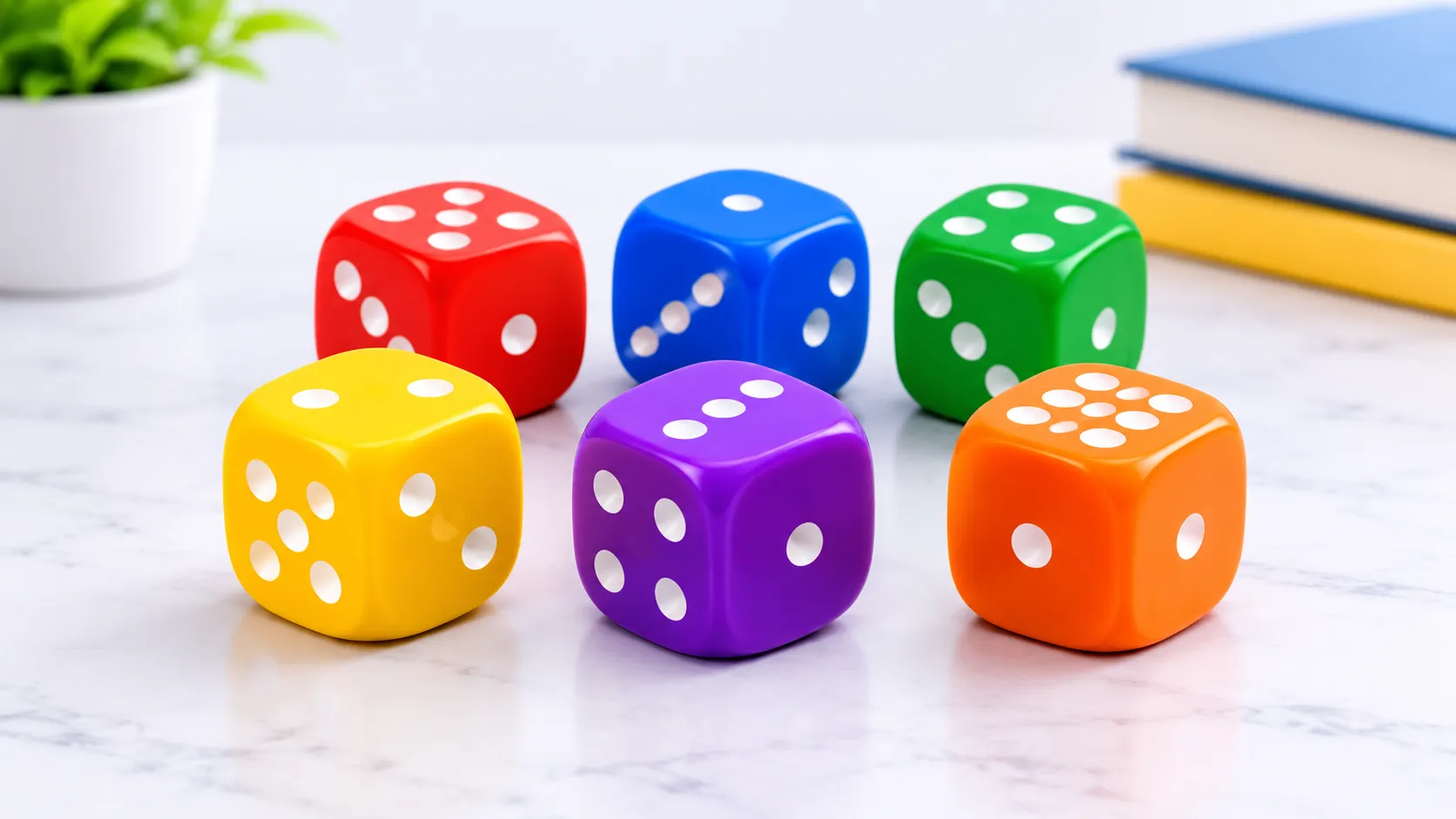
Have you ever played a dice game where every roll leads to the same familiar result? Adding colors to the activity can make it more interesting. A color dice roller brings a visual element into ordinary dice games by using different colors to represent players, challenges, subjects, or special instructions. It can be useful for family game nights, classroom activities, group challenges, and creative games.
Have you ever played a dice game where every roll leads to the same familiar result? Adding colors to the activity can make it more interesting. A color dice roller brings a visual element into ordinary dice games by using different colors to represent players, challenges, subjects, or special instructions. It can be useful for family game nights, classroom activities, group challenges, and creative games.
Explore RandomCount – Free Online Tools for everyday tasks. Whether you need a quick dice roll, random number, or other useful online utility, visit RandomCount and find a simple tool that fits your needs.
What Is a Color Dice Roller?
A color dice roller is a dice-based activity that uses different colors to represent specific outcomes, players, categories, or instructions. It can involve physical dice with colored faces or a digital setup that supports color-based results. Instead of depending only on numbers, players follow rules assigned to each color. This makes it easier to introduce different tasks and organize interactive games.
For example, imagine a classroom game with four colors: red, blue, green, and yellow. Red could represent a mathematics question, blue a vocabulary challenge, green a science question, and yellow a creative activity. When a player gets a color, they complete the task assigned to it. This simple rule gives everyone a clear activity to follow.
One important difference is that not every online dice roller offers color customization. Some tools generate numbered results using traditional dice formats, while others allow users to work with colored dice or custom outcomes. Before starting a game, check whether the selected tool supports the feature you need. You can also use ordinary numbered dice and assign colors to the results through your own game rules.
The idea is simple: colors make game instructions easier to recognize and help players organize their turns.
Some digital dice tools offer customizable appearances, while others focus on generating random numbered results. These features aren't necessarily the same, so check what the tool actually supports before choosing it.
How to Use a Color Dice Roller Online
Using virtual dice doesn't require special equipment or technical knowledge. Follow these simple steps to get started.
Step 1: Open an Online Dice Roller
Choose a browser-based dice tool that works on your device. RandomCount's online dice roller provides several standard dice options, including D4, D6, D8, D10, D12, and D20.
Step 2: Choose Your Dice Type
Think about the type of activity before choosing a die. A D6 is useful for everyday board games, while a D20 is commonly used in tabletop role-playing games. Other dice, such as D4, D8, D10, and D12, provide additional number ranges for different game rules. If your activity involves colors, decide how each color will be represented before rolling.
Step 3: Set the Number of Dice
Decide how many dice your activity requires. One die may be enough for a simple classroom challenge, while two or more dice can create additional combinations. For example, one roll could determine a player's number and another could select a task category. Follow the same rolling rules for every participant to keep the activity consistent.
Step 4: Roll and Follow the Result
Different dice colors can make games easier to organize and understand. When each color has a fixed purpose, players can quickly identify their next task without reading lengthy instructions. This approach is particularly useful in activities involving children, classrooms, teams, and family groups.
Why Are Different Dice Colors Useful?
Different dice colors can make games easier to organize and understand. When each color has a fixed purpose, players can quickly identify their next task without reading lengthy instructions. This approach is particularly useful in activities involving children, classrooms, teams, and family groups.
1. Easier Player Identification
Assign a different color to each player or team. For example, red can represent Team A, blue Team B, green Team C, and yellow Team D. This makes it easier to organize turns and identify which group should participate next.
2. Clearer Game Instructions
Give every color a specific meaning before the game starts. Red might indicate a question, blue a drawing task, green a physical activity, and yellow a guessing challenge. Players can understand their next activity without needing complicated rules.
3. Interactive Classroom Activities
Teachers can use color-based rules to organize learning activities. Each color can represent a subject, such as mathematics, science, English, or general knowledge. Students can participate in short challenges while practising different skills.
4. More Creative Game Variations
Colors can introduce unexpected combinations into familiar games. For example, a player might roll a color to select a category and then roll a numbered die to determine the question or challenge. This gives traditional games a fresh structure.
Google Dice vs. an Online Dice Roller
Google Dice and dedicated online dice rollers serve a similar basic purpose: they help users generate dice results without physical dice. However, their available features may differ. A search-based dice feature can be convenient for a quick roll, while a dedicated website may provide more specific dice options.
A standard online dice roller may support different dice formats, including D4, D6, D8, D10, D12, and D20. These formats are useful for different board games and tabletop activities. Some specialized tools may also provide additional customization, depending on their design.
If you want to use colored dice, check whether the selected platform actually supports color-based results. A numbered dice roller should not be confused with a customizable color dice tool. You can still create a color-based game by assigning specific meanings to numbered outcomes.
The best option depends on your activity. For a quick numbered result, a basic dice roller may be sufficient. For classroom challenges or custom games, choose a tool that matches your required features and rules.
How Digital Dice Generate Random Results
When you roll a digital die, the result is generated by a process designed to select an outcome from the available numbers. For example, a standard six-sided die should produce a result between 1 and 6. The process behind the result depends on the technology used by the particular online tool.
Many digital dice tools use pseudorandom number generators (PRNGs). These systems rely on mathematical algorithms to generate sequences of numbers that appear random. For a fair six-sided die with equally likely outcomes, each number has a probability of 1 in 6, or approximately 16.67%, on an individual roll.
For a standard six-sided die, the intended outcomes are numbers from 1 to 6. In a fair uniform distribution, each outcome has an equal probability of appearing.
That means the chance of rolling a particular number is 1 out of 6, or approximately 16.67%.
For a deeper explanation, explore the National Institute of Standards and Technology's random number glossary and RANDOM.ORG's introduction to randomness.
Remember that seeing the same number several times doesn't automatically mean a digital die is unfair. Independent random rolls can produce repeated results.
Fun Ways to Use Colored Virtual Dice
You don't need to be an experienced board game player to enjoy colored dice. Here are a few practical ideas.
Classroom challenges: Give each color a subject, such as mathematics, science, language, or general knowledge. Students roll and answer a question from the selected category.
Family game night: Create simple color-based challenges for children and adults. Different colors can introduce drawing, storytelling, guessing, or movement activities.
Team-building exercises: Assign colors to different tasks, discussion topics, or team challenges. This can help make group sessions more interactive.
Creative writing: Use colors to select a character, setting, or story theme. Combine the result with a numbered dice roll to create an unexpected writing prompt.
Quick decisions: Assign colors to different options when you need a simple way to choose between activities. Agree on the options first, then roll.
Example: Create a Simple Color Dice Challenge
You can create a simple game using four colors and one standard numbered die. First, assign a task to each color:
-
Red: Answer a general knowledge question.
-
Blue: Draw an object within 30 seconds.
-
Green: Name three things related to a selected topic.
-
Yellow: Create a short story using a given word.
Next, roll or select a color to determine the activity. Use a numbered die to decide how many points the player can earn or how many examples they need to provide. Each completed task earns points according to the rules.
For a fair game, explain all the instructions before starting and give every player the same opportunity to participate. You can adjust the challenges based on the participants' ages and abilities.
For classroom probability lessons, Khan Academy's guide to theoretical and experimental probability is a helpful additional resource.
Tips for Getting Better Results
Before starting a color dice activity, write down what each color represents. Keep the instructions short and easy to understand so that every participant knows what to do. If several people are playing, make sure everyone follows the same rules.
Choose colors with enough contrast to make them easy to distinguish. Some players may have difficulty identifying certain color combinations, so consider adding labels, numbers, or simple symbols alongside each color. This makes the activity more accessible to different participants.
If you are using dice for a probability experiment, record every result in a table. For example, roll a six-sided die 30 times and count how often each number appears. Compare the observed results with the expected probability. Remember that a small experiment may not produce perfectly equal results.
Frequently Asked Questions
1. What is a color dice roller?
A color dice roller is a physical or digital dice-based setup that uses different colors to represent players, activities, categories, or instructions. Each color has a predefined meaning, allowing participants to follow game rules more easily. The available features depend on the dice or digital tool being used.
2. Can I roll dice online without physical dice?
Yes. You can use an online dice roller through a web browser on a computer, tablet, or smartphone. Select an available dice type and generate a result without purchasing or carrying physical dice. The options depend on the features provided by the website.
3. Is Google Dice the same as an online dice roller?
Not exactly. Google Dice refers to Google's dice-rolling search experience, where available. A dedicated online dice roller may provide different dice formats, multiple dice options, and additional controls. The available features depend on the platform.
4. Can colored dice be used in classroom activities?
Yes. Teachers can assign colors to different subjects, questions, or classroom challenges. For example, red could represent mathematics, blue could represent vocabulary, and green could represent science. This approach can make group activities more interactive and easier to organize.
5. Are online dice rolls random?
Online dice tools generally use random or pseudorandom number generation methods to produce results. For a fair six-sided die, each number should have an equal probability of appearing on an individual roll. However, the implementation and reliability can vary between tools.
Final Thoughts
A color dice roller can bring a creative element to ordinary games by giving different colors specific meanings. From classroom questions and family challenges to team activities and storytelling exercises, color-based rules offer several ways to keep participants involved. The key is to choose simple instructions that everyone can understand and follow.
If you need numbered results, a standard online dice roller is a convenient option. For activities that require color customization, check whether your chosen tool supports that feature or create your own color-based rules. With a little preparation, even a simple dice game can become a more engaging group activity.
Try different game rules, keep the instructions clear, and see how a small change can make an ordinary dice activity more enjoyable.