
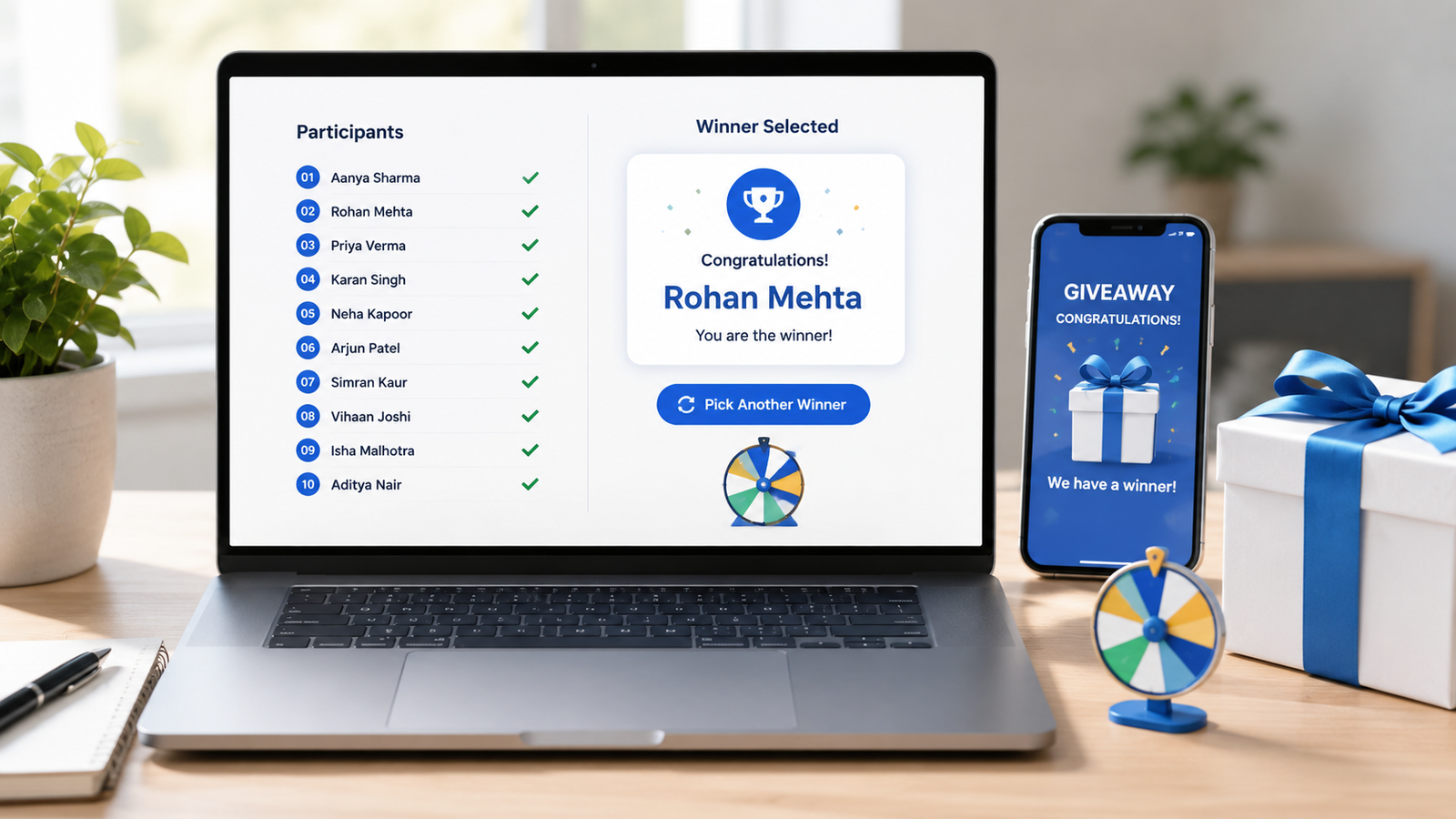
Running a giveaway can be a great way to bring people together, introduce a product, celebrate a milestone, or simply give something back to your audience. The exciting part is watching the entries arrive. The less exciting part comes when the giveaway closes and you have to decide who actually wins.
If there are only a few entries, choosing someone may seem easy. But when hundreds of people participate, picking a winner manually can quickly become uncomfortable. Even if you try to be fair, people may wonder whether you selected a friend, a loyal follower, or someone whose name happened to catch your attention.
That is where a random selection tool can help. Instead of making the final choice yourself, you prepare a fair list of eligible entries and let a random tool make the selection. The important thing is not simply pressing a random button. A trustworthy giveaway process starts before the draw and continues until the winner is announced.
Giveaway organizers should also understand the rules that may apply to prize promotions. The Federal Trade Commission's guidance on contests and sweepstakes is a useful starting point for understanding promotional requirements.
Why Fair Winner Selection Matters
A giveaway is based on a simple promise: people follow the rules, enter before the deadline, and have a chance to receive the prize. If the winner appears to be chosen personally, participants may question the entire promotion.
Random selection gives you a straightforward way to remove personal preference from the final step. You are not deciding which name you like most. You are selecting from a prepared group of eligible entries.
There is another benefit too. A clear selection process makes the giveaway easier to explain. If someone asks how the winner was chosen, you can describe the rules, the number of eligible entries, the random method, and the final result.
For larger or more formal promotions, it is worth keeping records of the process. RANDOM.ORG, for example, publishes guides explaining different approaches to random drawings and the importance of keeping a verifiable record when appropriate.
Start With Clear Giveaway Rules
Before collecting entries, decide exactly how the giveaway will work. This small step prevents many problems later.
Your rules should explain who can participate, when entries close, what people need to do to enter, how many winners will be selected, and how the winner will be contacted. If extra entries are allowed, explain how they are earned before the giveaway begins.
For example, you might say that each person receives one entry by submitting a form, while an additional entry is available for completing a specific optional action. Whatever system you choose, keep it consistent for everyone.
It is also helpful to mention what happens if a selected winner is not eligible or does not respond within the stated period. Having that rule in place means you do not have to invent a new process after the draw.
Build the Final Entry List
Once the giveaway closes, create one clean list containing the eligible entries. This is one of the most important parts of the process because a random tool can only work fairly if the information you provide is accurate.
Remove entries that clearly do not meet your published rules. Check for accidental duplicates when your giveaway is supposed to allow only one entry per person. At the same time, do not remove legitimate repeat entries if your original rules specifically allowed multiple entries.
It is also a good idea to separate the entry-checking stage from the winner-selection stage. First determine who is eligible. Then perform the random draw. This keeps the selection process easier to understand.
If you already have a list of names or usernames, a Random List Picker can be useful for selecting an entry from that prepared list.
How to Use a Random Tool for the Draw
After your final list is ready, the actual selection can be very simple.
- Close the giveaway at the published time.
- Review the entries and remove invalid submissions according to your rules.
- Count the final number of eligible entries.
- Enter each eligible entry into the random selection tool.
- Check the list once more for obvious mistakes.
- Run the random selection.
- Record or save the result if the giveaway requires proof of the draw.
- Verify the selected person's eligibility before confirming them as the winner.
For a visual and interactive selection, you can also use a Spin Wheel. A wheel can be especially useful when you are recording the draw for social media because viewers can see the selection taking place rather than simply seeing a winner's name afterward.
Keep the Selection Simple
There is sometimes a temptation to make a giveaway draw more complicated than it needs to be. Multiple rounds, complicated scoring systems, and last-minute changes can make participants suspicious.
If you have one prize and one eligible entry list, one random selection is usually easy to understand. If you have three prizes, decide beforehand whether you want three unique winners or whether the same person could win more than once.
If every winner must be different, remove the first winner from the remaining pool before selecting the next winner. The important thing is to announce that rule before the draw rather than changing it after seeing the results.
What About Large Giveaways?
A giveaway with a few dozen entries is easy to manage manually. A giveaway with thousands of entries requires more preparation.
For a large list, use a consistent entry format. For example, assign every eligible entry a unique number and keep the original list saved separately. You can then use a random number tool to select a number rather than handling a huge collection of names directly.
RandomCount's Random Number Generator can be useful for number-based selection. If your eligible entries are numbered from 1 to 500, for example, the generated number can correspond to one entry in your prepared list.
The key is to make sure every eligible participant has the correct number and that no participant is accidentally given extra numbers unless your giveaway rules specifically allow additional entries.
Should You Record the Winner Selection?
Recording the draw is not necessary for every small giveaway, but it can make a public promotion easier to trust. A short screen recording can show the final entry list, the selection method, and the result.
If you decide to record it, avoid displaying private information that participants did not expect to be made public. Email addresses, phone numbers, home addresses, and other sensitive details should not be shown simply to prove that a draw took place.
Using usernames, entry numbers, or other appropriate identifiers can be a better option when you need to demonstrate the process publicly.
The goal of recording is not to create a dramatic production. A simple, understandable record is often enough.
Common Giveaway Mistakes to Avoid
Even a random tool cannot fix a poorly planned giveaway. A few mistakes are particularly easy to avoid.
Changing the rules after entries close
Changing eligibility requirements after people have already entered can create unnecessary disputes. Decide the rules before the promotion starts and follow them consistently.
Picking again because you dislike the result
If the first selected entry is valid, do not simply spin again because you hoped for another name. A re-draw should happen only when there is a legitimate reason covered by your published rules.
Forgetting duplicate entries
If each person is supposed to have one chance, check for duplicate submissions before the random selection. Otherwise, one person may accidentally receive several chances.
Showing private participant information
A transparent giveaway does not mean publishing everything you collected. Use appropriate identifiers and protect personal information.
Not checking the winner
Random selection and eligibility are two different steps. A person can be randomly selected but still fail to meet the giveaway requirements. Always verify the selected entry before announcing the final winner.
How to Announce the Winner
Once the winner has been verified, make the announcement clear and simple. Mention the giveaway, state that the selection has been completed, and identify the winner using an appropriate public username or identifier.
If your rules require the winner to contact you, explain how they should do it and how long they have to respond. Never ask a winner to provide unnecessary sensitive information through a public comment.
You can also briefly explain how the winner was selected. For example, you might say that all eligible entries were placed into a random selection tool and one entry was selected after the giveaway closed.
This gives your audience enough context without turning a simple announcement into a long technical explanation.
When Random Selection Is Not the Right Choice
Random selection is useful when the giveaway rules say the winner will be selected randomly. It is not appropriate for every type of contest.
Some competitions are based on judging, skill, creativity, quality, or performance. If the rules say that a panel will select the best photograph, essay, design, or video, the winner should be chosen according to those judging criteria rather than by random selection.
Random tools should also not replace professional advice or careful review when a promotion involves legal, financial, regulatory, or other serious requirements. For those situations, make sure your giveaway follows the rules that apply to your location and platform.
A Simple Checklist Before You Draw
Before clicking the final selection button, take a minute to check the basics:
- Are entries officially closed?
- Have the published eligibility rules been applied?
- Have accidental duplicates been handled correctly?
- Does every valid entry have the correct chance of being selected?
- Have the number of winners and prize order been decided?
- Will you record the selection?
- Are you protecting participants' private information?
- Do you know what happens if the selected entry is invalid?
If the answer to these questions is clear, the actual random selection should be the easiest part of the entire giveaway.
Frequently Asked Questions
Can I use a random tool to choose a giveaway winner?
Yes. If your giveaway rules state that the winner will be selected randomly, a random list, wheel, or number tool can provide a simple way to make the final selection from eligible entries.
How do I make sure every participant has a fair chance?
Start by applying the same eligibility rules to everyone. Make sure duplicate entries, bonus entries, and exclusions are handled according to the rules announced before the giveaway begins.
Should I remove duplicate giveaway entries?
If your rules allow only one entry per person, duplicate submissions should normally be removed before the draw. If multiple entries are intentionally allowed, keep them according to the published rules instead.
Can I use a random number generator for a giveaway?
Yes. You can assign each eligible entry a number and use a random number generator to select one of those numbers. The numbering system must be prepared carefully so that every eligible entry has the intended chance.
Should I record my giveaway winner selection?
Recording is optional for many small giveaways, but it can make a public draw easier for participants to understand and review. If you record the process, avoid showing private participant information.
What should I do if the selected winner is not eligible?
Follow the procedure stated in your giveaway rules. If the rules allow a replacement winner, remove or disqualify the invalid entry and conduct the next selection according to the same process.
Can I select another winner if I do not like the first result?
You should not re-draw simply because you prefer another result. If the selected entry is valid, changing the result can undermine trust. A re-draw should have a legitimate reason that is consistent with the published rules.
Is random selection suitable for every contest?
No. Random selection is suitable when the promotion uses a random draw. Skill-based or judged competitions should use the judging criteria announced for that contest instead of replacing the process with a random selection.
Final Thoughts
Choosing a giveaway winner does not need to be stressful. The best approach is to create a clear set of rules, prepare an accurate list of eligible entries, and use a random method that matches the rules you announced.
A random tool is especially useful because it takes personal preference out of the final selection. Whether you have a small social media giveaway, a community event, a classroom activity, or a simple prize draw, the same basic idea applies: prepare the options carefully, select randomly, and explain the result clearly.
If you are working with names, try the Random List Picker. For a more visual selection, the Spin Wheel can make the draw more engaging. For numbered entries, the Random Number Generator provides another simple approach.
For additional information about random drawings and ways to make a selection easier to verify, you can also read the RANDOM.ORG guides on random drawings.
In the end, fairness is not only about the tool you use. It comes from following the same rules for everyone, keeping the entry list accurate, and resisting the temptation to change the process once the result appears.